


Who received a blood test?
Key points
- At each appointment, participants in the NHS-Galleri trial gave a blood sample.
- Half of participants had their samples tested using the Galleri® blood test.
- Half of participants did not have their samples tested.
- Only people who had the blood test and had a cancer signal detected (‘positive’) test were sent their test result.
- This means that most people in the trial did not get a test result.
Test and control groups
Trials have to be designed in a particular way to understand how well a new test or treatment works.
The best way to learn this is to compare two groups of people: one group that did get the new test or treatment, and another that did not. These are called the “test” and “control” groups.
In the NHS-Galleri trial, half of the people in the trial are in the test group and half are in the control group.

Test group
People in the test group had their blood samples tested using the Galleri test. Anyone who had a cancer signal detected (‘positive’) test was contacted about their result. No other results will be shared.

Control group
People in the control group had their blood samples stored. Their samples might be tested in the future. They will not get any results, not even after the trial is finished. A control group is important in research like this to provide a comparison with the test group.
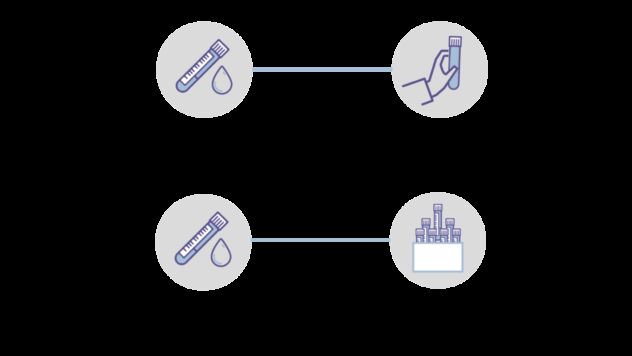 Blood samples collected from people in the test group were tested with the blood test. Samples from the control group were stored for future research.
You will not be told if you are in the test or the control group, not even after the trial has finished. If people know which group they are in, it might alter the way they behave about their health. This could make the research results less clear or reliable.
Who had a Galleri test
When you joined the trial, a computer randomly put you in the test or control group. This was like the computer flipping a coin — you had a 50:50 chance of being in either group.
You will not be told if you are in the test or the control group, not even after the trial has finished.
If people know which group they are in, it might alter the way they behave about their health. This could make the research results less clear or reliable.
 People taking part in the trial were randomly put in the test or the control group, with a 50:50 chance of being in either group. Blood samples from the test group were tested using the Galleri test. Blood samples from the control group were stored.
Who gets a test result
Most people on the trial did not get a test result. Only people in the test group who had a cancer signal detected were given their test result.
 Most people on the trial did not get a test result. Only people in the test group who have a cancer signal detected were given their test result.
Getting a cancer signal detected result
If you are in the test group, you were told if a cancer signal was found in your blood sample.
A cancer signal detected test result does not mean you definitely have cancer. It just means that you might have cancer, and you need to have some further tests to check.
A research nurse from the trial team contacted you about your result and arranged an appointment at an NHS hospital for further tests. Your GP was also told about your result.
About half the people in the trial who had a cancer signal detected were found to have cancer after further tests in the NHS, and the other half were not.
If the Galleri test found a cancer signal, but no cancer was found after further tests, please continue to attend any cancer screening appointments you are invited to and visit your GP if you experience any symptoms that are new or unusual for you.
No other results will be shared
If you are in the test group and a cancer signal was not found, you will not be told. This is for two reasons:
- A no cancer signal detected result does not mean you do not have cancer. The test might not find all cancers.
- In trials, people often do not know if they are in the test or control group. This is important for getting reliable research results. If you are told your test result, you will know you are part of the test group, which could make the research results less clear or reliable.
Attending your usual cancer screening appointments
It is very important that you keep attending your usual cancer screening appointments when you are invited to do so. You should also make an appointment to talk to your GP if you notice any symptoms that are new or unusual for you.
 Half of the people in the NHS-Galleri trial had their blood samples tested using the Galleri test and the other half did not. Results were only shared with people who had a cancer signal detected test result. These people had follow up tests to check if they did have cancer.
If you have been diagnosed with cancer but did not receive a cancer signal detected result, there are a couple of possible reasons.
- In this trial half the people received the test and half did not. You might have been in the group who did not have their blood tested.
- If your blood was tested, the test does not find every cancer. Some cancers might not release enough DNA into the blood to be picked up, or the cancer might have developed after the test was done.
It is very important that you keep attending your usual cancer screening appointments when you are invited to do so. You should also make an appointment to talk to your GP if you notice any symptoms that are new or unusual for you.
The control group samples might be tested with the Galleri test in the future to help the trial team understand any differences between what happens to people in the test group and the control group. If you were in the control group, you will not get any test results from the trial, even now even after the trial has finished. You were asked if your samples could be stored and tested after the trial to help with other research to improve how well the test works.
The Galleri test is not currently available on the NHS. It is available through private healthcare providers for eligible people in England from July 2026. Having the test privately is separate from taking part in the NHS-Galleri trial.
Summary
When you joined the trial you were put at random into the test group or the control group. There was a 50:50 chance (like flipping a coin) of being in either group.
If you are in the test group:
- Your blood samples were tested using the Galleri test
- You were told if a cancer signal was detected
- You will not be told any other results
If you are in the control group:
- Your blood samples were not tested using the Galleri test — they have been stored and might be tested in the future
- You will not be told any results
You will not be told if you are in the test or control group, not even after the trial has finished. This is to help make the research results clear and reliable.